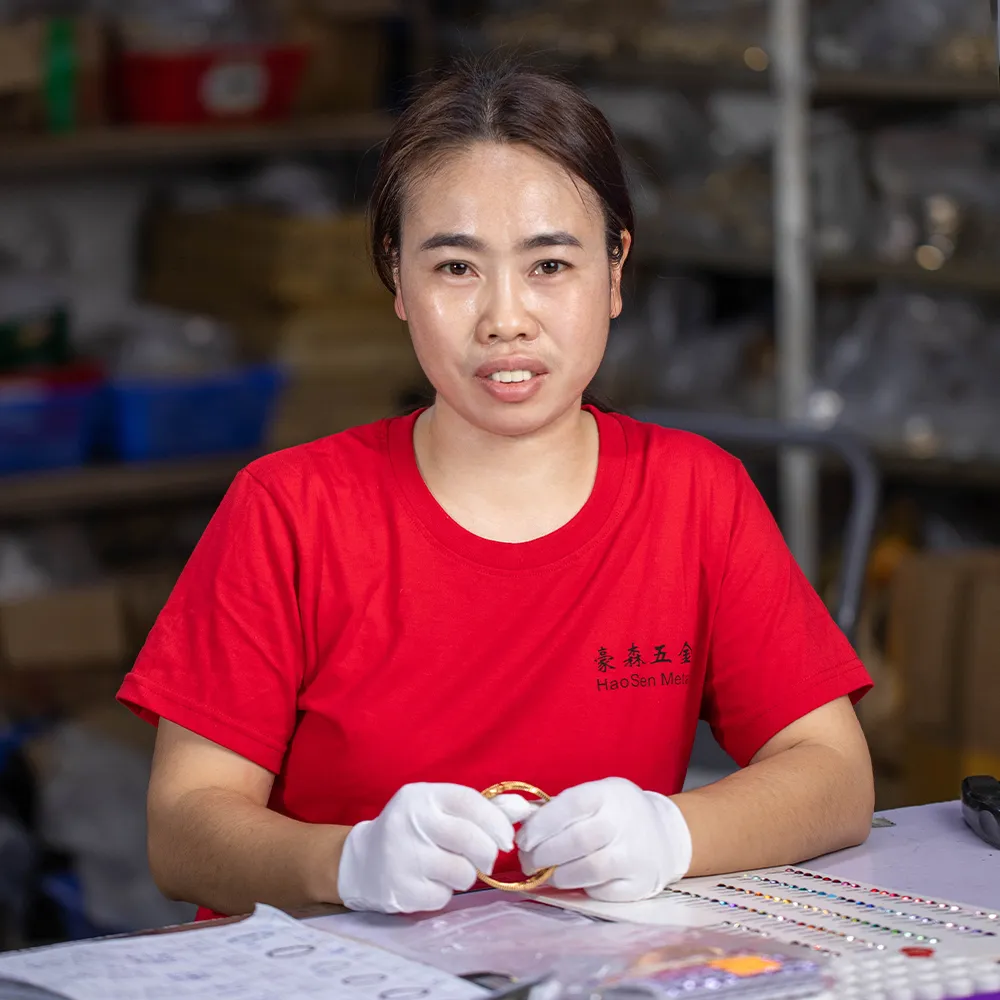

At Haosen Jewelry, we firmly believe that quality and safety begin with the first raw material. That’s why we regularly send our 316L stainless steel bars to independent third-party laboratories for testing.
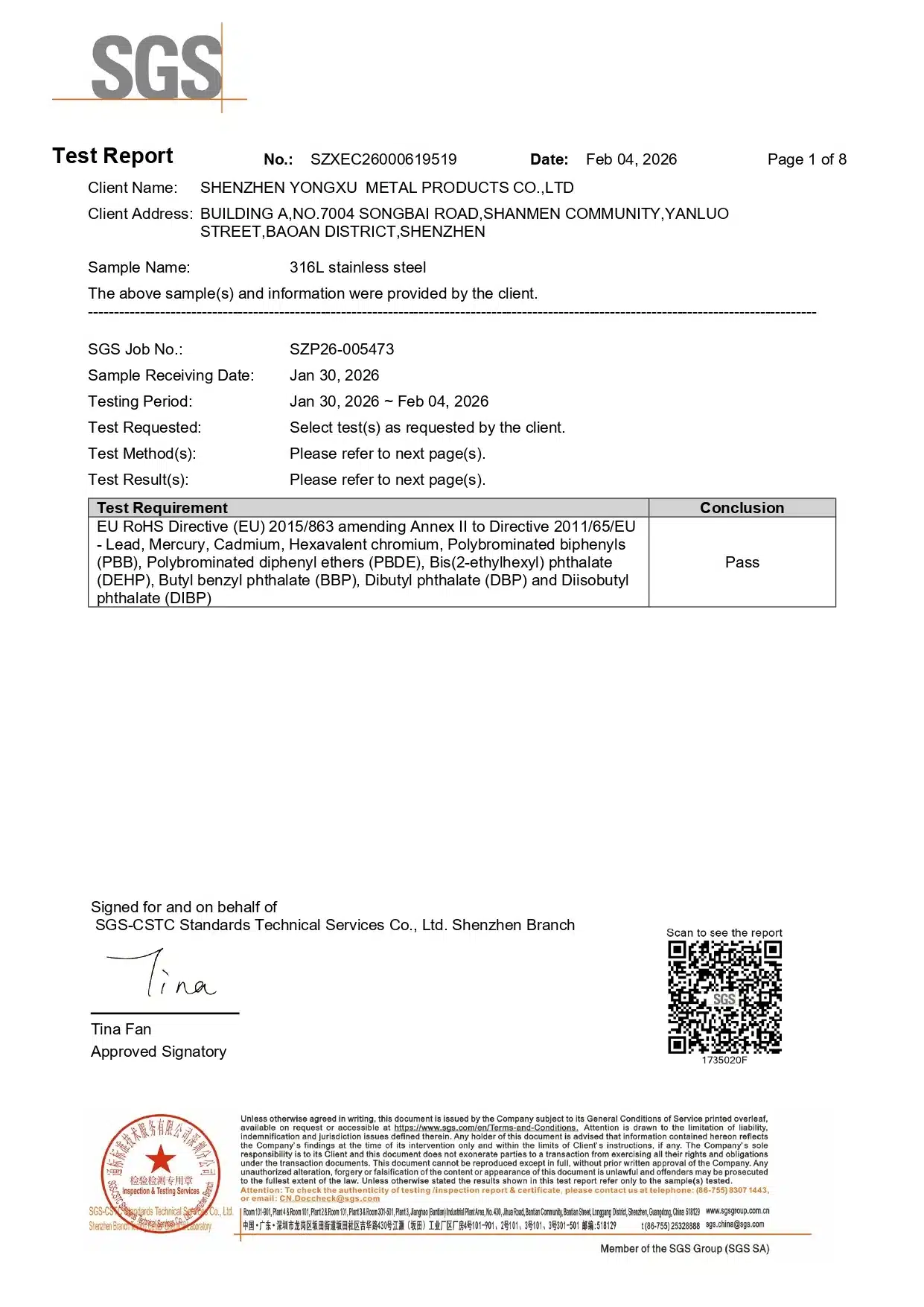
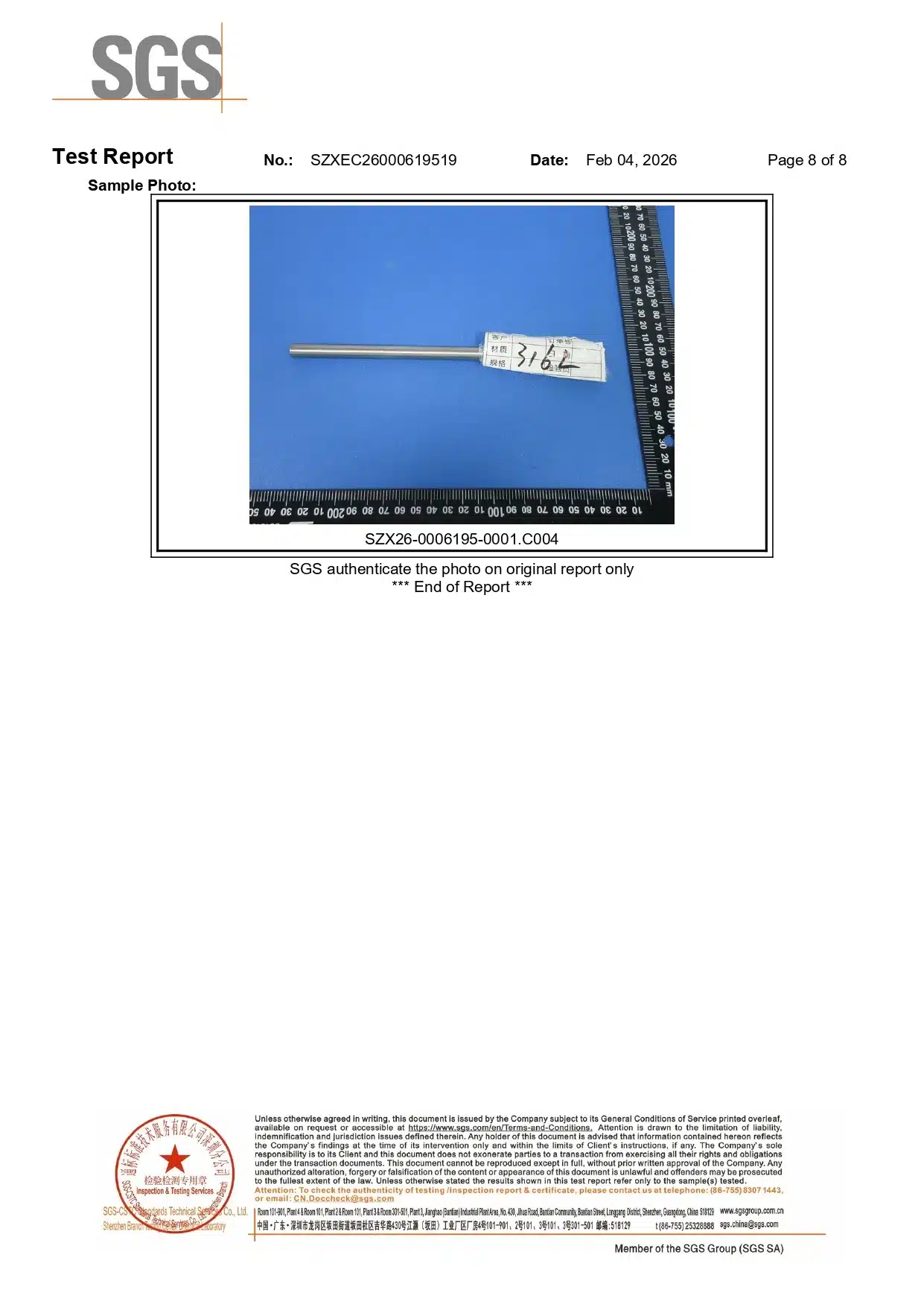
We are pleased to share our latest SGS Test Report (Report No.: SZXEC26000619519, Date: February 4, 2026). The report confirms that our 316L stainless steel bars fully comply with the requirements of the EU RoHS Directive (EU) 2015/863.
Key Information of Stainless Steel Bars Test Report
- Report Certificate No.: SZXEC26000619519
- Report Issue Date: February 04, 2026
- Testing Laboratory: SGS-CSTC Standards Technical Services Co., Ltd. Shenzhen Branch
- Sample Description: 316L stainless steel bar
- Regulatory Reference: EU RoHS Directive (EU) 2015/863
- Test Methods: With reference to IEC 62321-4:2013+AMD1:2017, IEC 62321-5:2013, IEC 62321-7-1:2015, IEC 62321-6:2015 and IEC 62321-8:2017, analysis performed by ICP-OES/AAS, UV-Vis and GC-MS.
- Method Detected Limit (MDL):
- Lead (Pb), Mercury (Hg), Cadmium (Cd): 2 mg/kg
- Hexavalent Chromium (Cr(VI)): 0.10 μg/cm²
- Each component of PBB and PBDE: 5 mg/kg
- Phthalates (DEHP, BBP, DBP, DIBP): 50 mg/kg
Stainless Steel Bars Test Items & Results
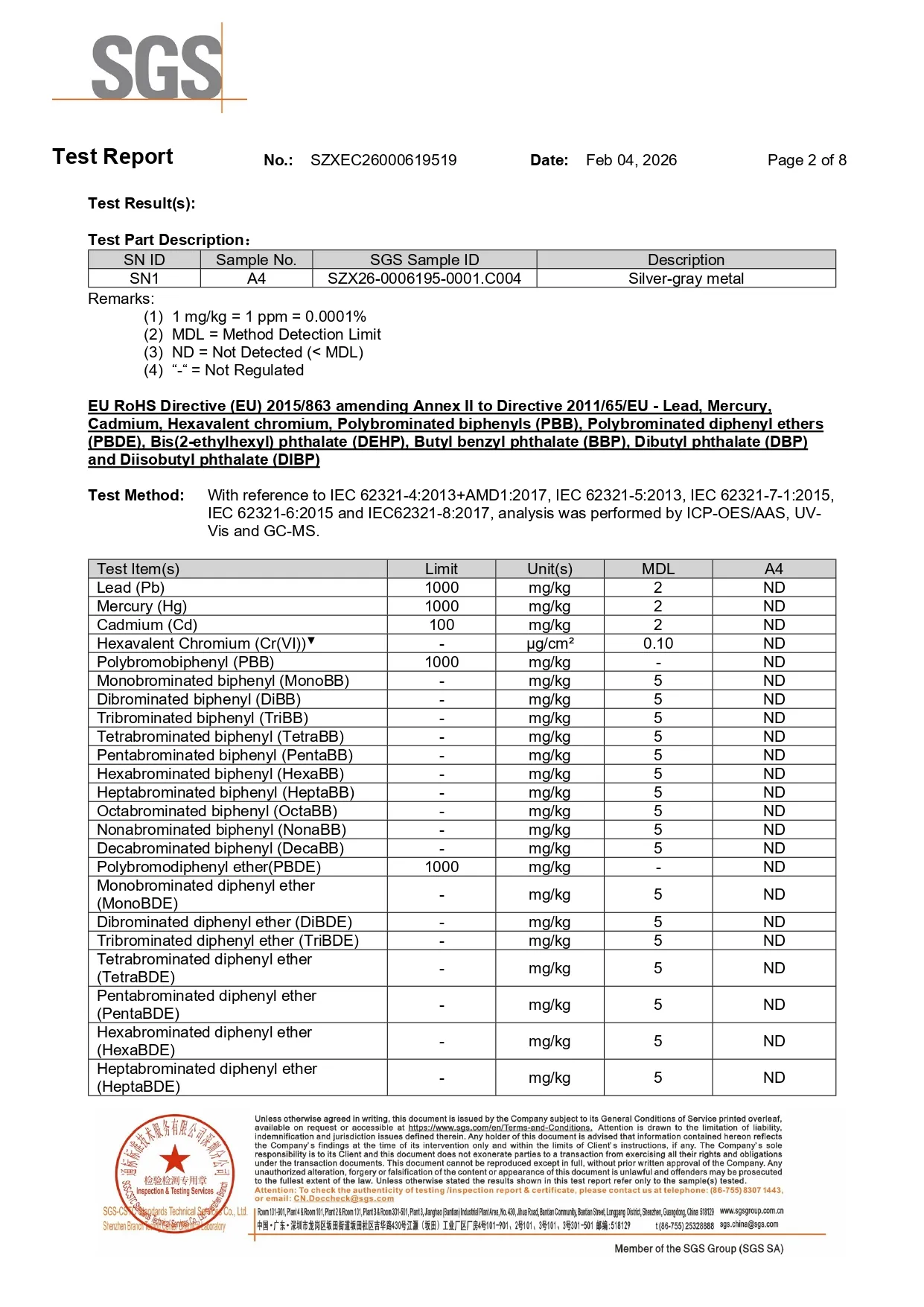
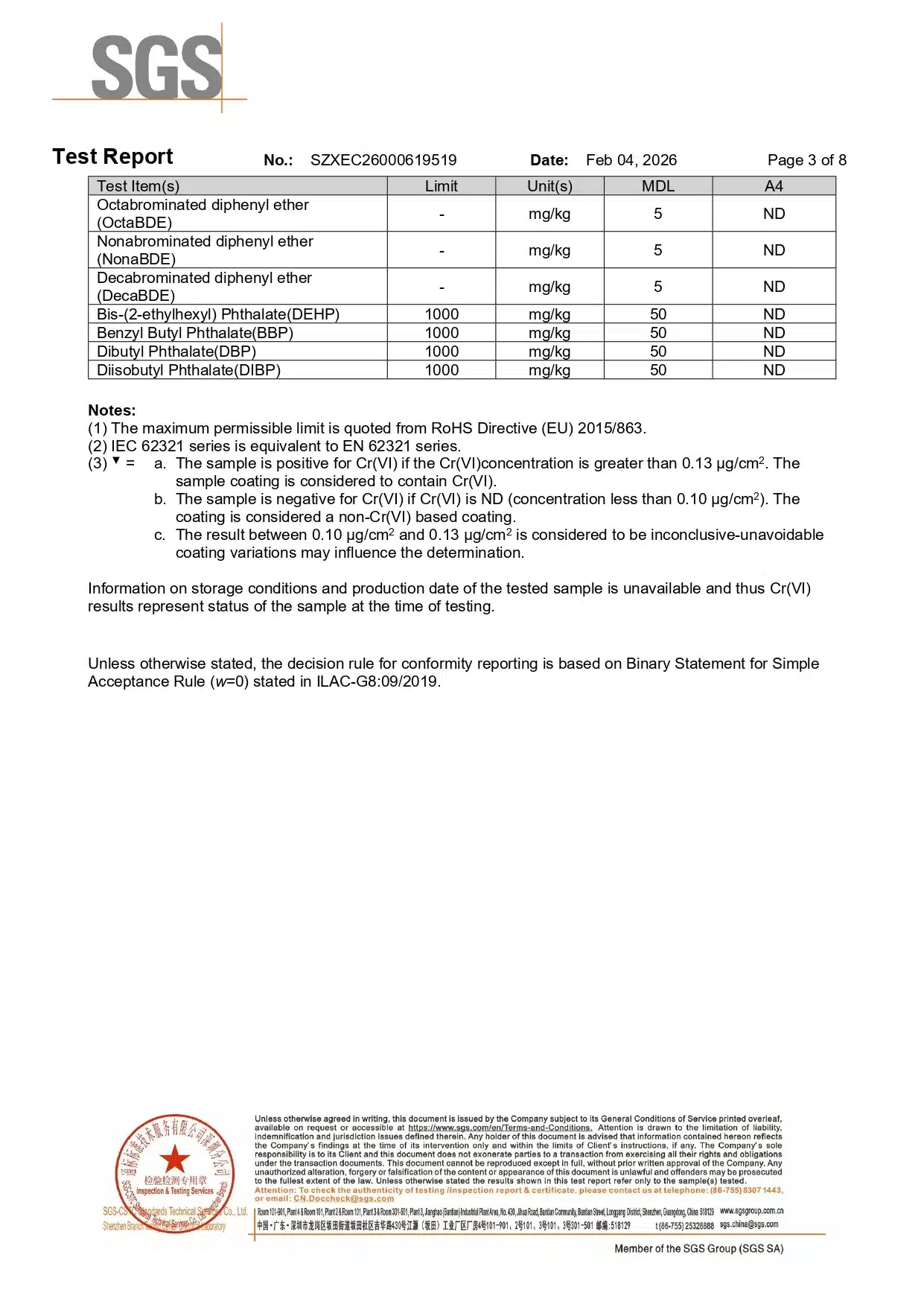
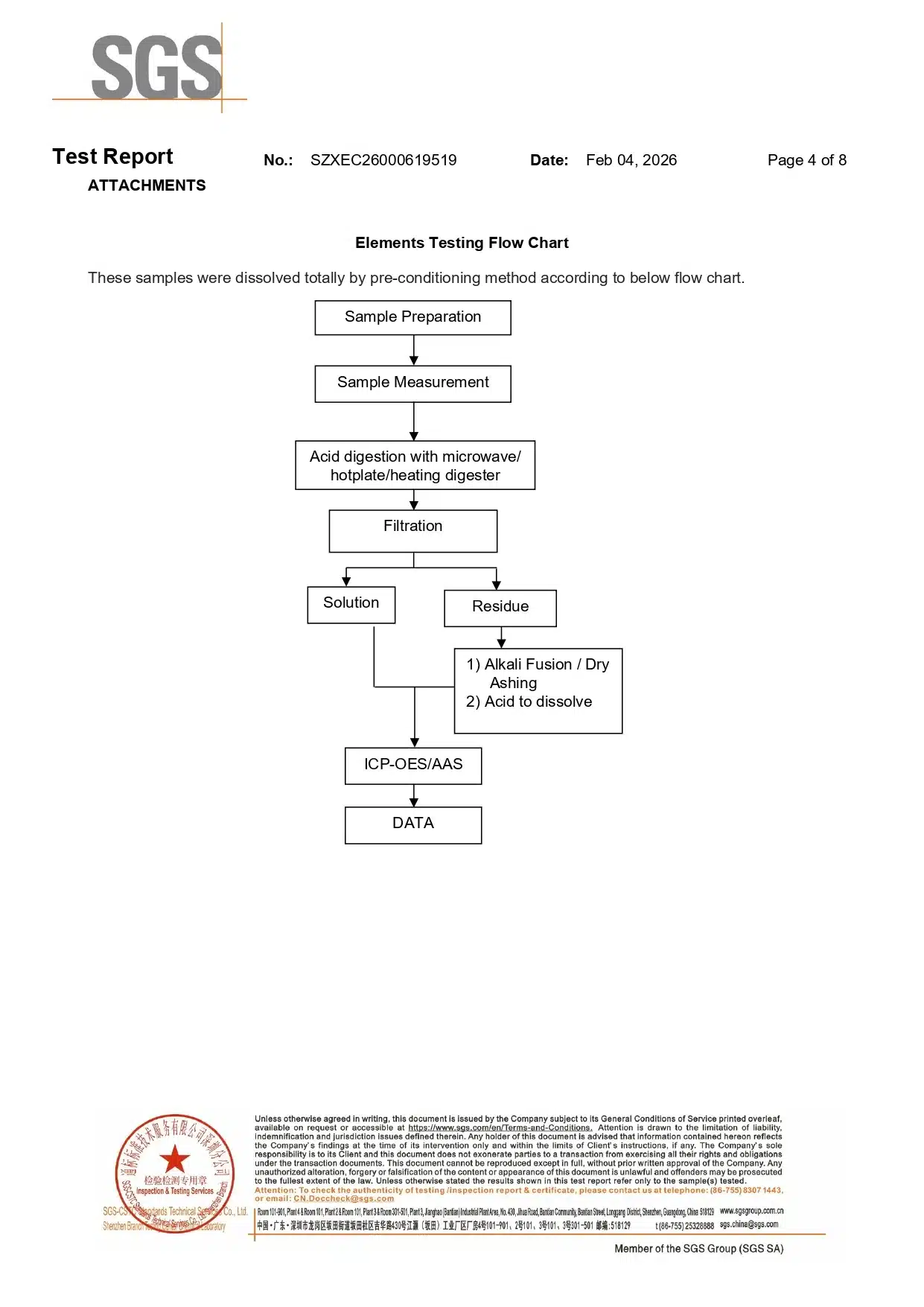
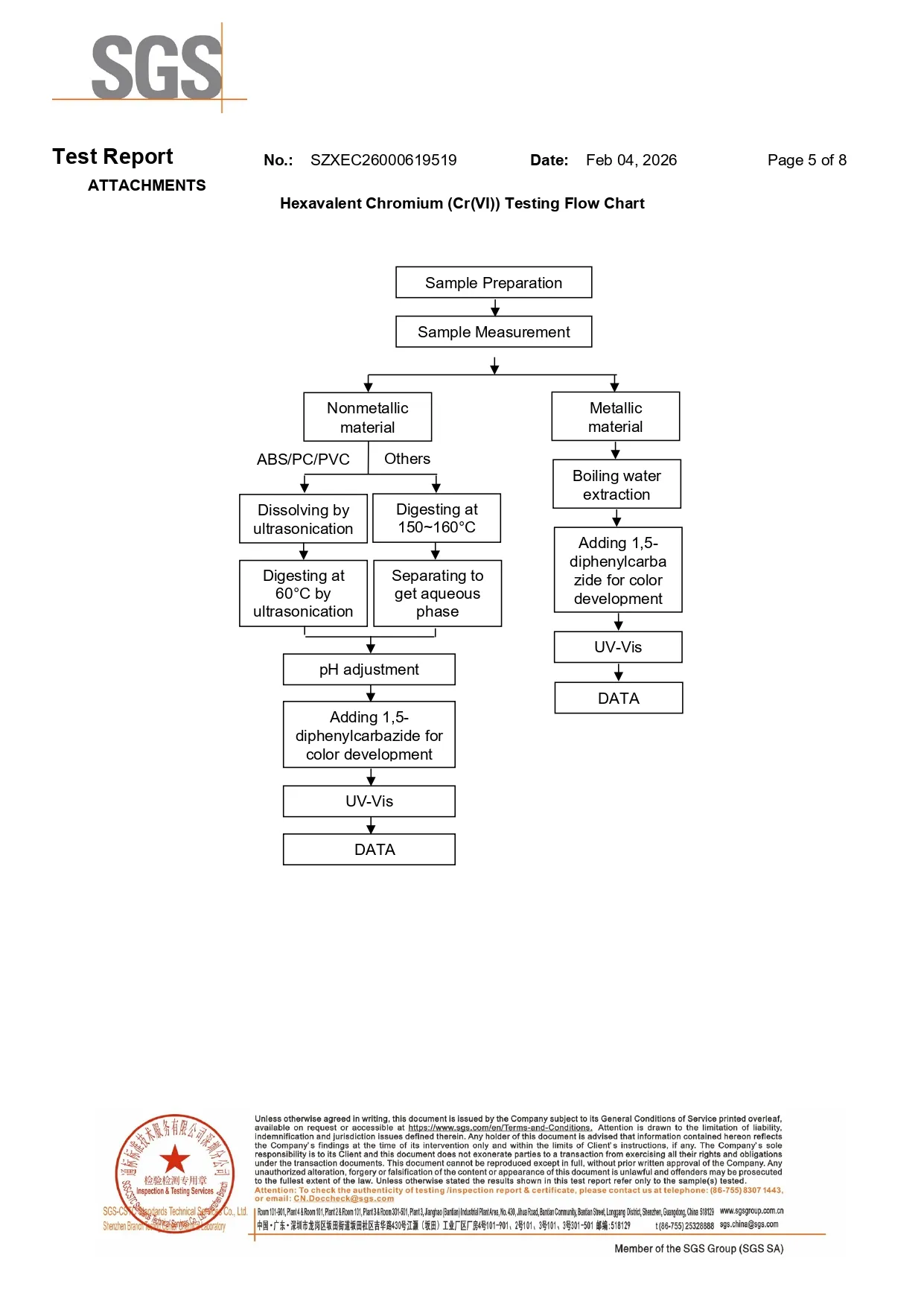
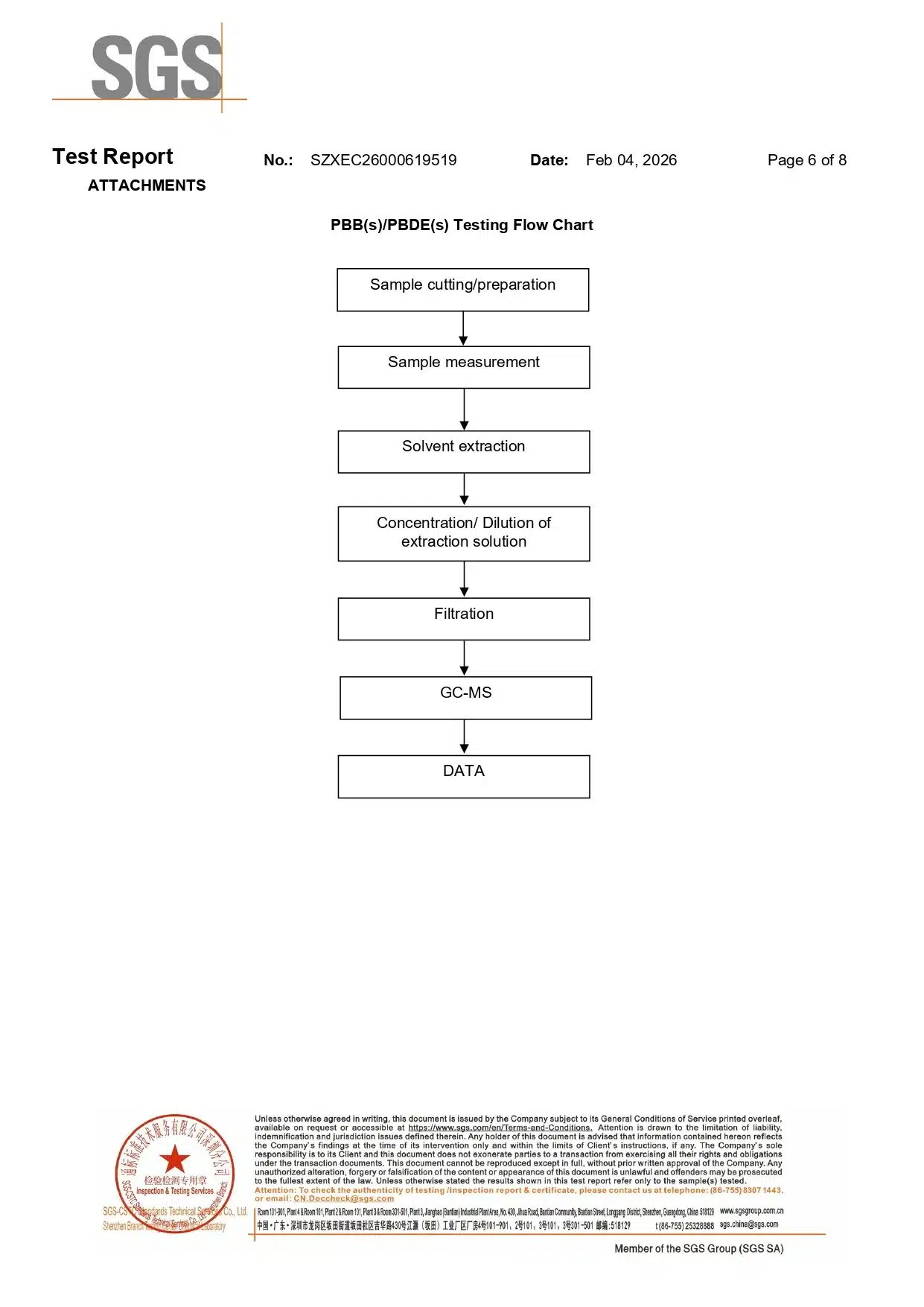
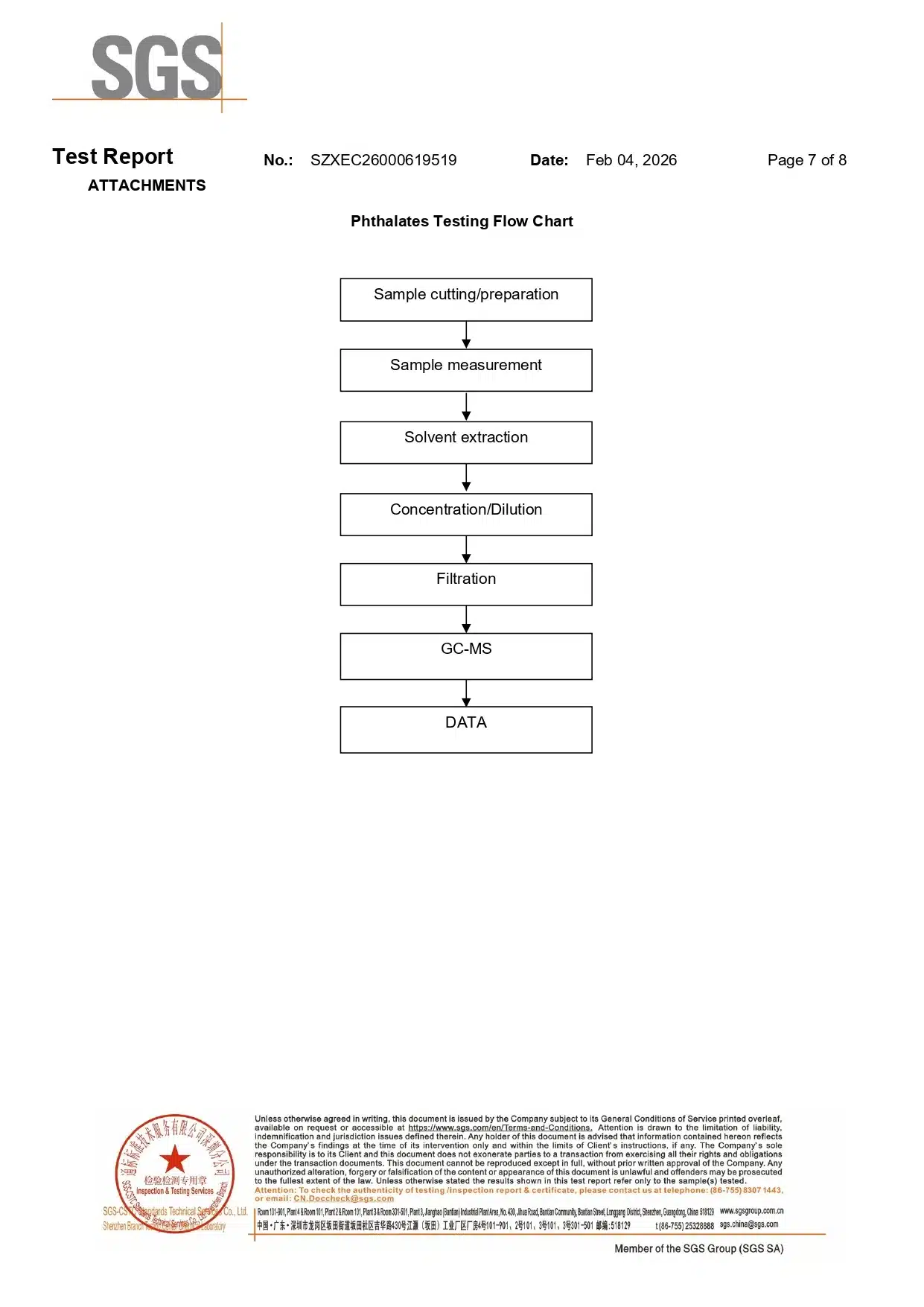
All restricted substances were either not detected or far below the limit requirements. The samples were tested by SGS-CSTC Shenzhen Branch using IEC 62321 series methods (ICP-OES, UV-Vis, GC-MS).
Certified 316L Stainless Steel Bars: What This Means for You
- Safe & Skin-Friendly: Prolonged direct contact with skin will not cause allergies or irritation. Whether you are making earrings, rings, colliers, ou bracelets, your end customers can wear them with confidence, without worrying about nickel release or heavy metal migration.
- Compliant for EU Market Access: Our 316L stainless steel bars fully meet the limit requirements of the EU RoHS Directive (EU) 2015/863. All restricted substances are either not detected or far below the legal limits. If you plan to export jewelry to EU countries, using SGS-certified, compliant raw materials saves you from repeated testing, reduces customs clearance risks, and helps your brand build a responsible and trustworthy image.
- Reliable Supply Chain: No need to worry about quality fluctuations between batches or scrambling to provide compliance documents to customers. From raw material incoming inspection to finished product shipping, Haosen Jewelry adheres to a traceable and verifiable quality management system, making your sourcing decisions simpler and more assured.
Q1: What does RoHS compliance mean for 316L stainless steel bars?
RoHS compliance means the 316L stainless steel bars have been tested for restricted hazardous substances such as Lead (Pb), Cadmium (Cd), Mercury (Hg), Hexavalent Chromium (Cr(VI)), PBB, PBDE, and certain phthalates. Compliant materials meet the limits established by the EU RoHS Directive (EU) 2015/863.
Q2: Why is SGS testing important for stainless steel jewelry materials?
SGS is a globally recognized third-party testing organization. An SGS RoHS report provides independent verification that the material meets regulatory requirements and can help jewelry brands, importers, and wholesalers demonstrate product compliance to customers and authorities.
Q3: Can RoHS-compliant 316L stainless steel bars be used for jewelry manufacturing?
Yes. RoHS-compliant 316L stainless steel bars are widely used for manufacturing earrings, necklaces, bracelets, rings, body jewelry, and other fashion accessories. Using compliant raw materials helps reduce regulatory risks when selling in international markets.
Q4: Does RoHS compliance guarantee that the material is safe for skin contact?
RoHS compliance focuses on restricting hazardous substances. For jewelry intended for prolonged skin contact, additional testing such as nickel release testing under EU REACH requirements may also be recommended to verify skin safety.
Q5: How much does RoHS testing cost for 316L stainless steel bars?
The cost of RoHS testing depends on several factors, including the material type, number of samples, testing scope, and the laboratory selected. For jewelry raw materials such as 316L stainless steel bars, costs can vary significantly based on project requirements.
Q6: Who is responsible for paying RoHS testing fees?
In most cases, the manufacturer, brand owner, or importer is responsible for RoHS compliance testing costs. Some jewelry manufacturers proactively test raw materials and finished products and provide existing test reports to customers, helping reduce the need for duplicate testing.
Q7: How often should jewelry manufacturers test raw materials for RoHS compliance?
Most professional jewelry manufacturers perform periodic testing when changing suppliers, introducing new material batches, or updating compliance documentation. Regular testing helps ensure long-term supply chain consistency and regulatory compliance.
Q8: Is 316L stainless steel suitable for the European jewelry market?
Yes. 316L stainless steel is widely used in the European jewelry market because of its corrosion resistance, durability, and ability to meet compliance requirements when properly tested and certified.
Author

Arranges third-party lab testing (SGS/RoHS) and 100% Final Quality Control.