
A bracelet consists of a main chain and small hanging charms. When designing, we need to understand the rationality of these size combinations. There are three variables: the thickness of the main bracelet chain, the size of the small charms, and the quantity of the small charms. To make the bracelet look coordinated, comfortable, and aesthetically pleasing as a whole, these three variables must follow certain principles of balance. We can analyze this from two dimensions: visual weight and physical space.
As an OEM/ODM China jewelry manufacturer with 16 years of experience, Haosen Bijoux fantaisie knows from working with global brands and designers that excellent jewelry design is not just about stunning concepts, but also about the balance of details during mass production. Whether using 316L stainless steel, eco-brass, or titanium, a disproportionate design will directly affect the final wearing and production experience.
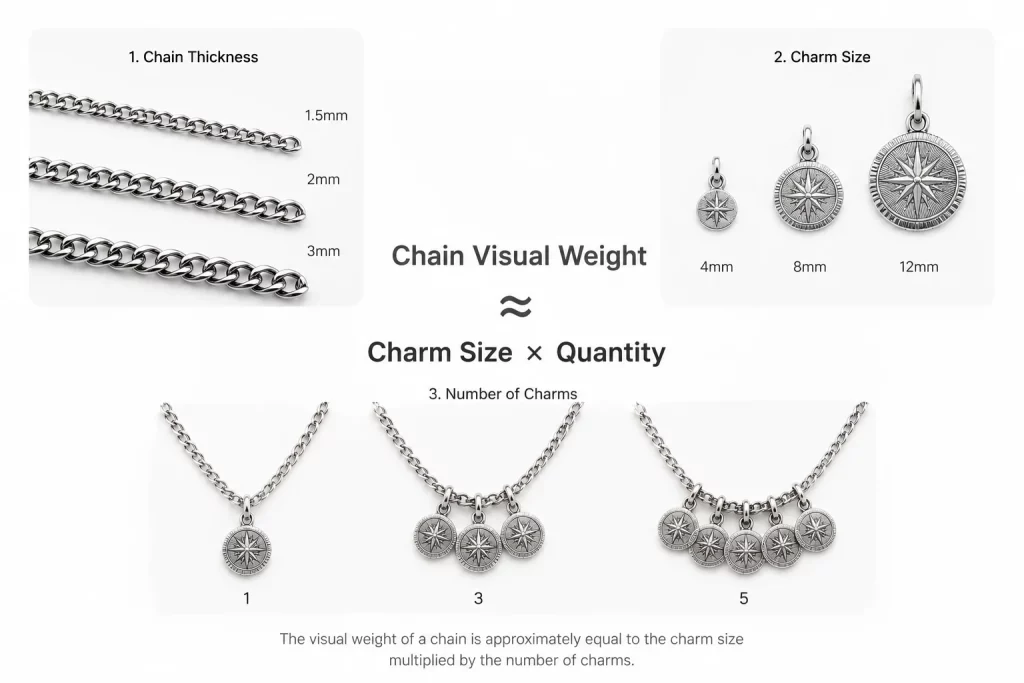
1. How to Calculate the Core Balance Formula for Custom Bracelet Designs?
The visual weight of the chain ≈ The centralization/dispersion effect of (Visual weight of a single charm × Quantity of charms).
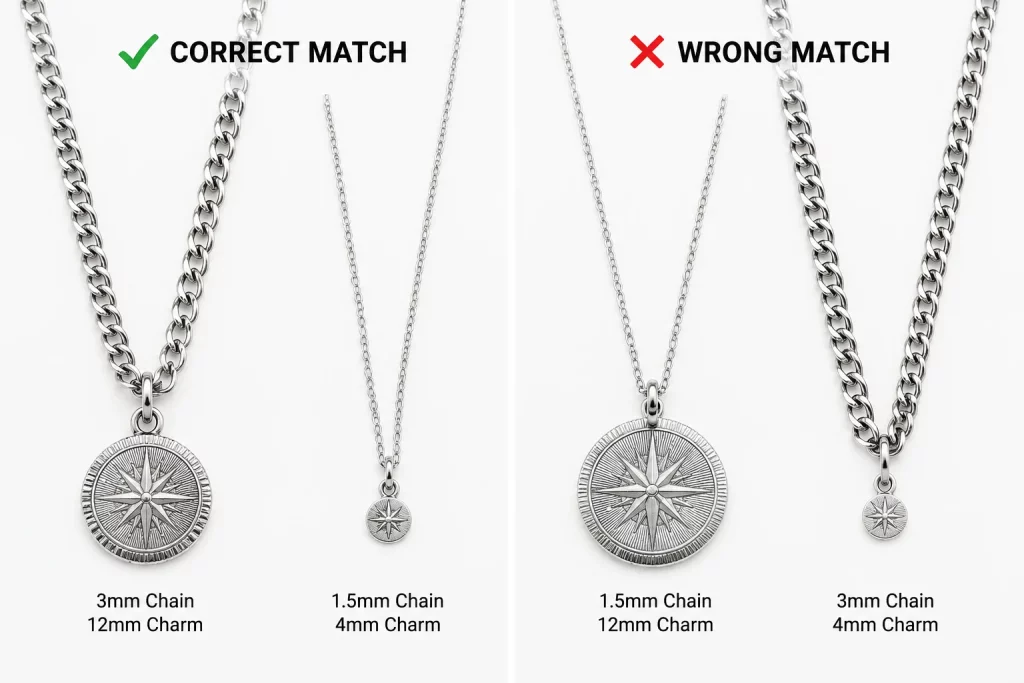
2. What Are the Ideal Matching Rules for Bracelet Chain Thickness and Charm Size?
3. Which Unbalanced Combinations Should Your Jewelry Factory Avoid in Production?
4. How Can the "Squint Test" Quickly Verify Your Custom Bracelet Proportions?
Hold the bracelet at a distance and squint to look at the overall outline:
5. How Do We Ensure Weight-Bearing Safety in OEM Jewelry Manufacturing?
Safety Suggestion: If total weight >15g, or single charm >8g, use a chain with a safety clasp or a double-layer chain.
Factory-Level Material & Quality Control (Haosen Jewelry Exclusive)
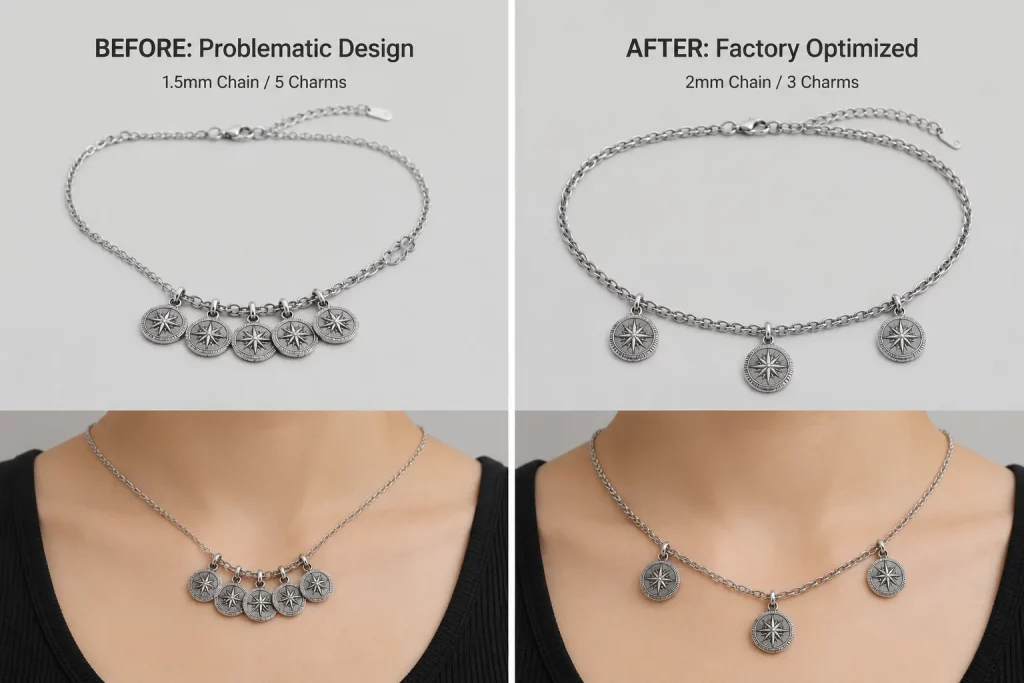
6. What Can We Learn from Successful Real Case Comparisons by Haosen Jewelry?
7. Which Common Style Design Parameters Should Every Bracelet Wholesaler Know?
8. Frequently Asked Questions (FAQ)
Q1: Max charms per bracelet?
No absolute limit. Leave 2-3mm space. A 1.5mm chain + 4mm charms fits 10-12. |
Q2: Thin chain + large charm?
Not recommended. If needed, use a double-strand/safety chain, and total weight ≤3g. |
Q3: How to arrange multiple charms?
1. Descending size (largest in middle). 2. Symmetrical. 3. Random but visually balanced. |
Q4: Does chain length affect proportions?
Yes. Thinner wrists need “thin+small” proportions; thicker wrists can enlarge variables. |
Q5: Mass production advice?
Choose a factory like Haosen Jewelry (SEDEX certified). We offer flexible MOQs (30-120 pcs), ~25-day delivery, and a US showroom in San Diego, CA for easy consultation. |
9. Text Version Quick Reference Card
Summary: Thick chains match with large or dense; thin chains match with small or sparse; medium thickness is the most versatile.
If you find this article helpful, feel free to bookmark it or share it with friends who also love DIY bracelets. Want to learn more bracelet design tips? You can check out our “Complete Guide to Bracelet Design” and “How to Choose Bracelet Length?”. As your loyal supply chain partner, Haosen Jewelry is always committed to transforming your jewelry inspiration into perfect mass-produced pieces that stand the test of the market.
Author

Ertian Jiang (Jasper) is the founder of Haosen Metal Jewelry. Since the age of 26, he has combined deep roots in traditional craftsmanship with a sharp vision for the market to build the foundation of the company’s excellence.
Ertian Jiang started on the ground floor as a craftsman, specializing in semi-precious stones (agate, mother of pearl, tiger’s eye) and manual inlaying—perfecting how to fit natural stones into metal bases without gaps or glue failure. He also worked on the front lines of sales, speaking face-to-face with buyers and listening to their frustrations about fallen stones and fading colors.