
Must-read: 3 key tips for confirming 316L Stainless Steel jewelry sizes before mold making
Designing and producing custom bracelet charms for overseas B2B clients involves more than just sending a CAD file to approval.Even when a client confirms a CAD drawing,the final product may appear too large or small.Based on our experience,these three tips can save both time and cost when confirming charm sizes for custom stainless steel charms:
1. Discrepancies Between Paper Dimensions and Actual Worn Appearance
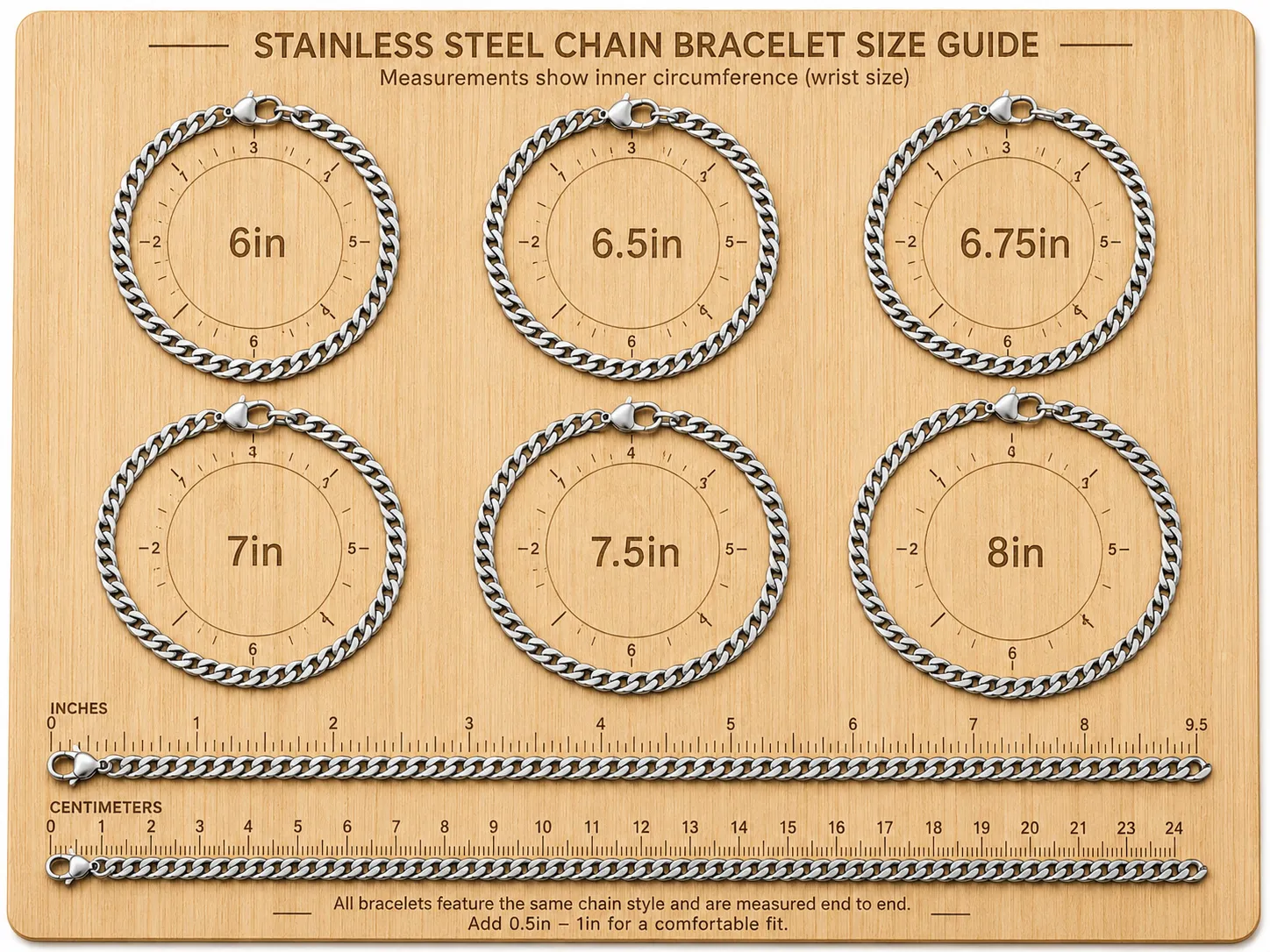
Although CAD files provide precise two-dimensional dimensional data, they lack a three-dimensional reference for how the piece is worn; consequently, clients often find it difficult to accurately judge the actual proportions of the jewelry on the wrist. By utilizing 1:1 paper printouts or physical 3D prototypes, we can provide realistic references for size and proportion, thereby identifying potential dimensional mismatches *before* mold creation—preventing the need for rework and avoiding material waste.
2. The First-time Clients benefit from proactive guidance and support from our team.
Not all clients know exactly what size or weight they want.As a custom jewelry manufacturer,it’s our responsibility to provide visual references and explain the impact of size,material,and wearability before approving molds.
3. Extra validation before mold making saves tenfold in cost
Mold modification or remake fees for 316L stainless steel charms are expensive.Adding a step like 1:1 printed paper sample→optional 3D resin printing→client approval may take only 30 minutes but can prevent**$200+**in correction fees.
Client background and requirements
An overseas client approached 96jewelry.com with the following B2B order:
- Product:Woven cord bracelet with detachable charm
- Style:Delicate,compact
- Material:316Lstainless steel charm,polished steel finish
- Cord diameter:3mm
This was the client’s first custom jewelry project.While they desired a high-quality,polished finish,they were unfamiliar with the technical details of mold-making or charm sizing.
Why did the client approve the CAD drawing but still get the wrong size?
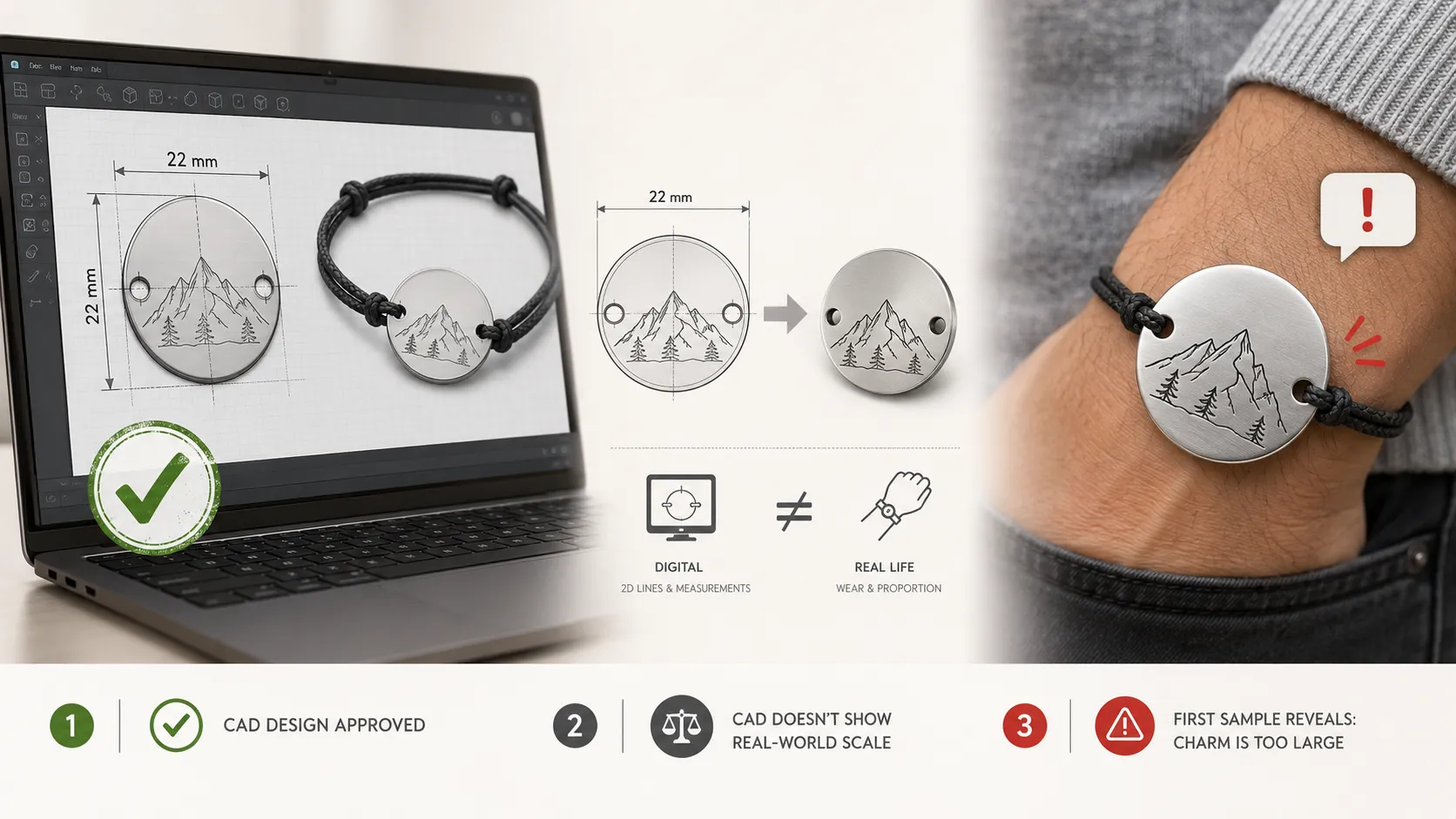
Upon receiving the request,our design team created a CAD file with a 22mm charm diameter. In our experience, this size works well for a woven cord bracelet—it balances delicacy with visual presence.
The client approved the CAD drawing quickly. However, when the first physical sample arrived, they said:
“This charm is too big for my bracelet.”
Why did this happen? The CAD drawing only conveys lines and dimensions. Clients often lack context for how the charm will look and feel on a wrist. This misalignment between expectation and reality is common in custom stainless steel charm production when no visual validation is conducted. For a deeper understanding of how size,thickness, and material interact in bracelet design, you can refer to our guide on the three key variables that affect bracelet charm proportion and styling
Why did 22mm look fine on paper but seem oversized in real life?
Technically, 22mm is a standard charm size. But for a delicate 3mm woven cord bracelet:
- 2D CAD cannot convey 3D visual scale perception
- Clients may underestimate the density and weight of stainless steel
- Digital approval provides no tactile or wearing feedback
Without proper size validation, even a professionally designed CAD file can lead to client dissatisfaction.
How to quickly validate charm sizes using 1:1 printed paper samples
Our design team proposed a low cost, highly efficient solution:
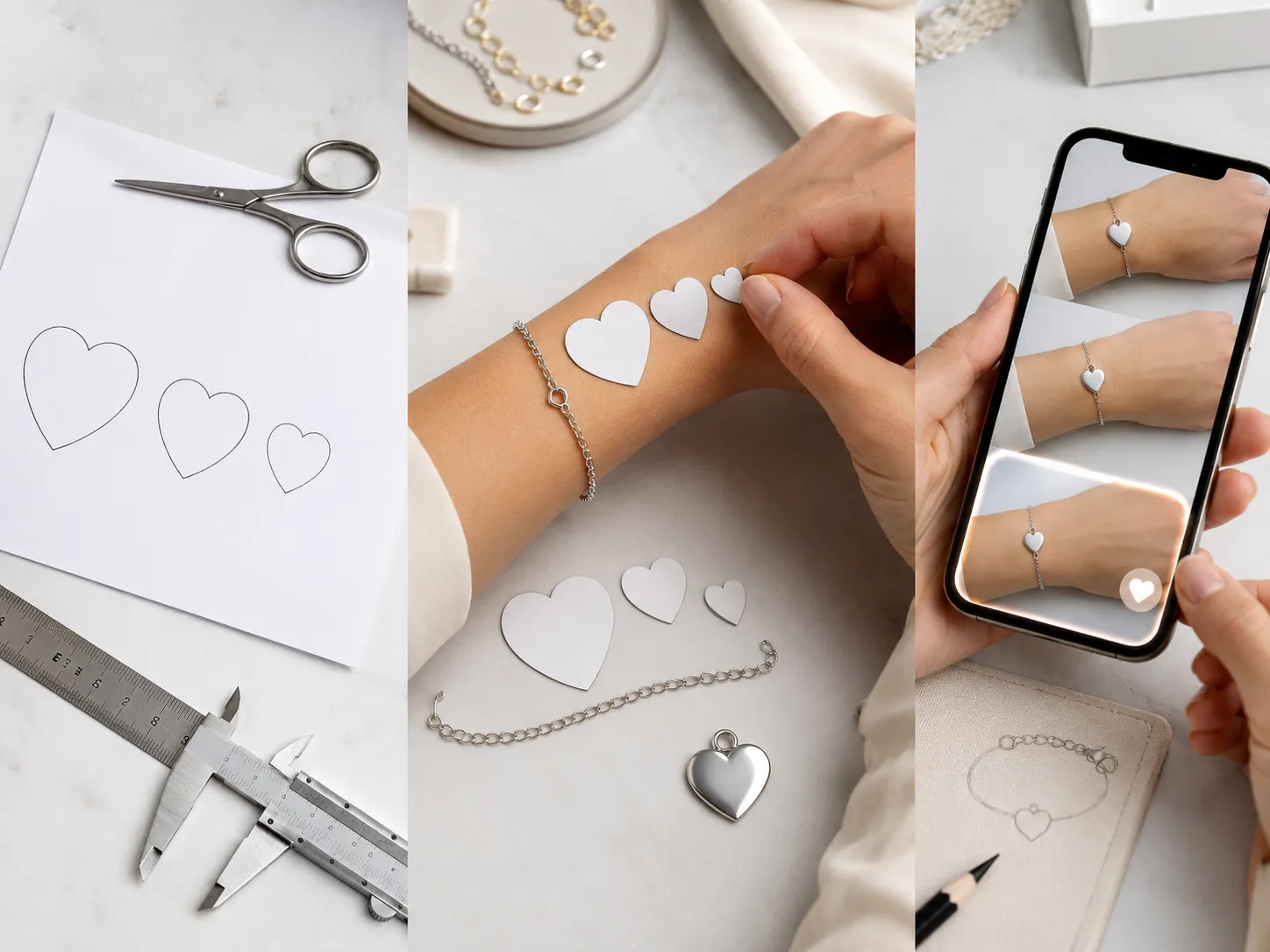
- Print 1:1 scale outlines of the charm in 16mm, 18mm, and 22mm
- Cut out each shape and place it directly on the wrist to simulate real wearing proportions
- Take clear photos and videos for the client to review instantly
This step lets clients see and feel the true size without producing a mold or resin prototype. Within minutes, the client confidently selected 16mm as the ideal size.
How does a professional jewelry factory verify charm size before mold making?
Our standard pre-production workflow balances efficiency and accuracy:
- 1:1 paper sample confirmation (10 minutes)
Helps clients grasp real-world dimensions and eliminates ambiguity from CAD-only reviews. - Optional 3D resin prototype (1–2 days)
Confirms thickness, curvature, wearing comfort, and wrist fit; allows minor design adjustments before steel mold production. - Client final approval → mold making
Ensures precise mold production and minimizes the risk of remakes or modifications.
In this case, the client trusted the 1:1 paper validation and skipped 3D printing. The final 16mm stainless steel charm passed approval on the first mold.
How correct size confirmation helps clients succeed
The final results exceeded expectations:
- Perfect fit: 16mm charm complemented the delicate cord bracelet beautifully
- High client satisfaction: Immediate positive feedback and praise for our proactive service
- Long-term partnership: The client referred other brands to us, commenting:“This manufacturer not only produces high-quality charms but also helps clients think through sizing issues ahead of time.”
This case clearly demonstrates the importance of pre-production validation and careful size confirmation in professional B2B jewelry manufacturing.
How to choose the right manufacturer for your jewelry ideas
For overseas buyers looking for a reliable custom bracelet charm manufacturer, consider the following:
- Experience with 316Lstainless steel charms
- Ensure the manufacturer has expertise in finishing,polishing,and casting stainless steel.
- Pre-production size validation process
- Look for factories that provide 1:1 paper samplesor 3D resin prototypes.
- Clear communication and proactive guidance
- Especially important for first-time clients unfamiliar with CAD,molds,and wearable scale.
- Cost transparency
- A professional factory should outline potential remake costs and steps to prevent them.
- Ability to scale orders
- Check if they handle B2Bbulk production efficiently,from prototype to final delivery.
At 96jewelry.com, our process guarantees:
- Free design assessment for your sketches
- 1:1 printed paper size validation
- Optional 3Dprinted prototype for comfort and proportion check
- Accurate mold production after client confirmation
Whether your idea is a delicate stainless steel charm or a more complex bracelet design,our B2B workflow ensures accuracy,efficiency,and quality.
Design Parameters for Common Styles
- Minimalist single charm: 1.5mm chain + 1 charm (8–10mm)
- Delicate dual charm: 2mm chain + 1 large (10mm) + 1 small (6mm)
- Boho multi-charm: 1.5mm chain + 5–7 charms (4–6mm)
- Luxury statement: 3mm chain + 1 charm (15–18mm)
- Punk stacked: 4mm chain + 3–4 charms (10–12mm)
FAQ
1. Why do custom bracelet charms often look larger in real life than in CAD drawings?
CAD files show precise measurements but lack real-world proportion context.Without 1:1 visualization,clients cannot accurately perceive wearable scale.
2. What is the ideal charm size for a 3mm woven cord bracelet?
For delicate styles,16mm–18mm is typically ideal.Larger sizes like 22mm may appear oversized depending on wrist proportion.
3. How does a 1:1 paper sample help prevent mold errors?
It provides a physical reference of diameter and proportion before mold making,eliminating guesswork and reducing remake risk.
4. Is 22mm considered a standard charm size?
Yes,22mm is common for statement designs,but it may not suit minimalist or delicate bracelet styles.
5. How much can mold modification cost for 316L stainless steel charms?
Mold corrections typically cost$150–$300 and may delay production by 7–14 days.
6. Should I request a 3D resin prototype before stainless steel mold making?
For complex shapes or thicker charms,a 3D resin prototype is highly recommended to verify thickness,curvature,and comfort.
7. What is the safest workflow before approving a stainless steel charm mold?
1:1 paper sample→optional 3D resin prototype→final approval→mold production.
8. How do I choose a reliable custom bracelet charm manufacturer?
Look for expertise in 316L stainless steel,clear pre-production validation steps,cost transparency,and B2B production capability.
