

- Jasper Jiang
- No Comments
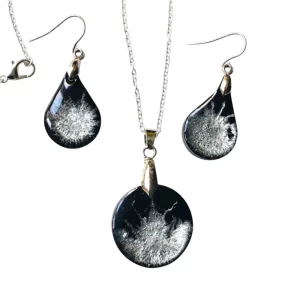
Resin, a material that was known for its natural fluid qualities, has long since been associated with the word “cheap”; however, through its clever pairing with artistic metals, it has become a popular choice for the world of high fashion. The heart of the mixed-media jewelry trend is contained within the contrasts created through the pairing of the warmth of resin with the cold metal.
Within this trend, it is all about achieving metal customization accuracy. It is here that Haosen Jewelry differs significantly in its expertise. Utilizing industrial-grade resin necklace pendant manufacturing technology, Haosen Jewelry allows you to easily turn your design ideas into mass-production-possible high-quality custom resin necklaces, fill your popular product inventory, and capture market potential quickly.
Strategic Material Selection: Engineering the Perfect Metal Base
1. Choosing 316L Stainless Steel
The key benefit is in its outstanding biocompatibility. Since it is a medical material, it satisfies the huge market segment demanding hypoallergenic jewelry. Its use in creating ‘second skin’ type jewelry is, therefore, apt since it has to be close to the skin for a long period. The durability offered is also beneficial in that the resin components will be embedded in the material in such a way that they will remain new.
This material is known to be ductile to a high degree and thus can be precision-cast or engrained without limits to design. It will prove to be the best choice for Jewelry ODM Partners for those customers who are eager to get deep cooperation because no other material will be able to serve as an appropriate canvas to implement their artistic idea.
3.Choosing Zinc Alloy
Its strength lies in its strong casting capabilities, which provide an efficient and economical way to rapidly iterate various popular styles. This makes it a suited tool for fast fashion and the mass retail market, which enables brands to respond to various trends and entice various consumers with various styles and an affordable price tag.
Through this material planning, brand is able to create its product matrix systematically, and everything, from its design concept to its finished products, is aligned well with the market response.
The Art of Fusion: Four Innovative Metal and Resin Combination Techniques
When creating custom resin jewelry, the combination of metal and resin is not only an aesthetic choice but also a reflection of technical expertise. Below are four mainstream methods of combining these materials and an explanation of the professional techniques involved.
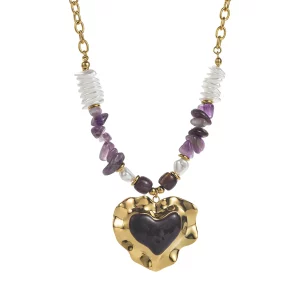
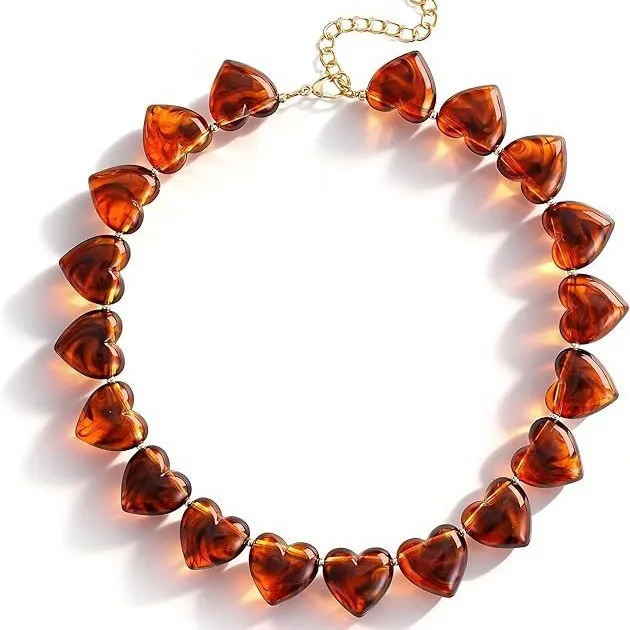
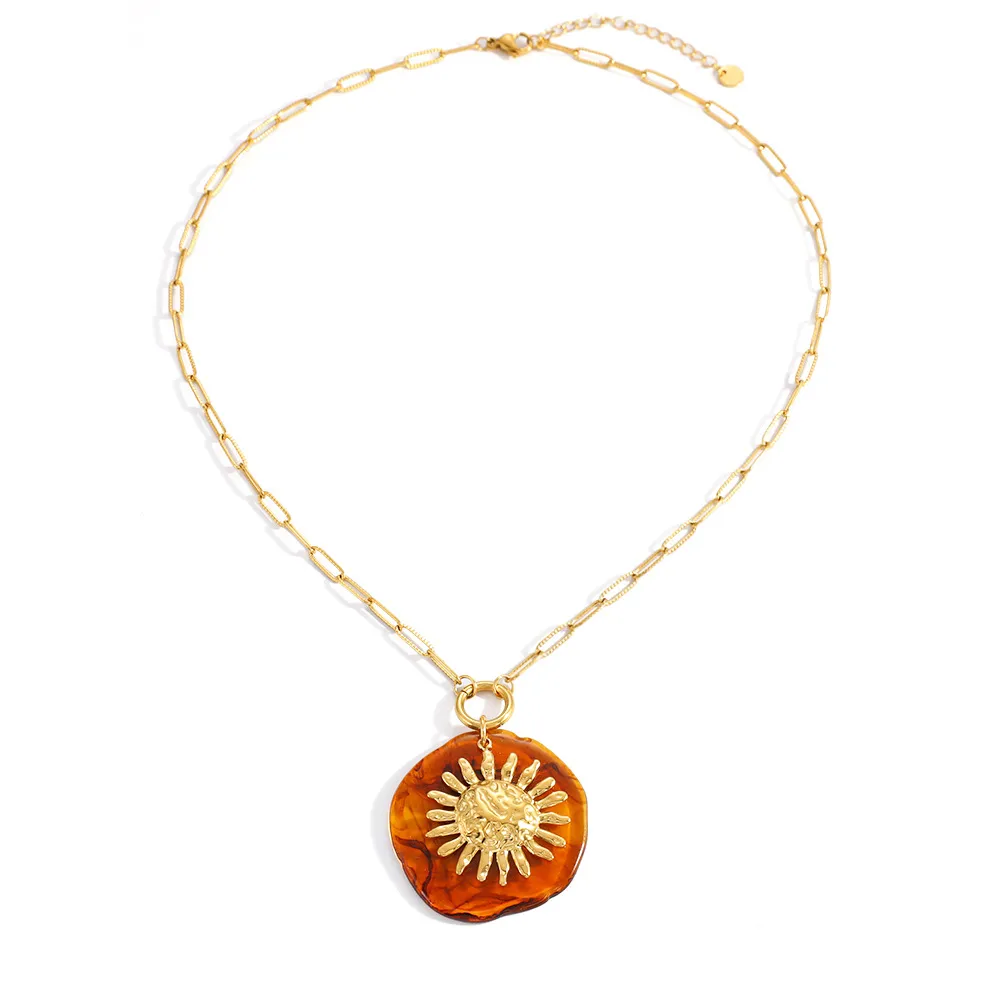
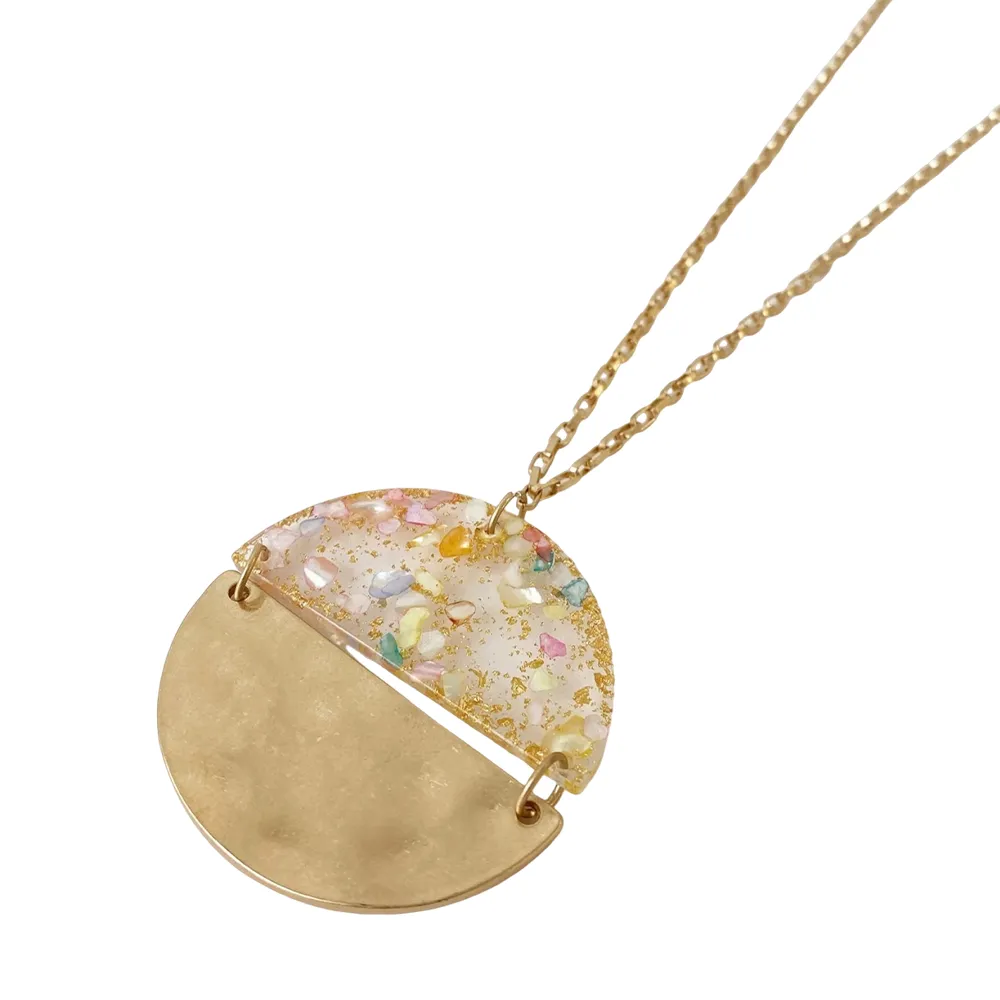
1. Filled Type: Metal as the Container
This is the most classic and common combination, she adds. The metal is the frame or base of the jewelry, and the resin is the filler.
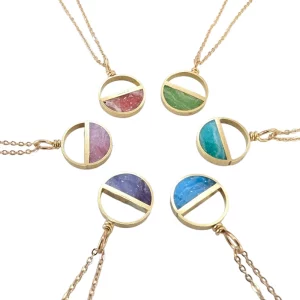
- Bezel Setting: Like gemstone setting, resin is poured over an already created metal setting (such as ring setting or pendant setting).
- Filigree Style: Using metal wires to draw a shape on a metal plate to create tiny “partitions,” different colored resins fill each partition.
- Open Work Filling: The metal part is hollow (no base plate), and the resin is poured inside. It looks like the effect of stained glass inside a church when cured.
2. Encapsulated/Embedded Type: Resin as the Main Body
In such a format, the metal is no longer the container but rather a graphic feature “sealed” inside the resin.
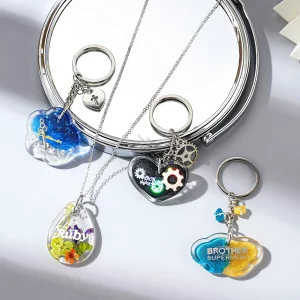
- Inclusion: Small items such as metal pieces (gold leaf, silver wire, small gears, metal shavings) can be embedded in a mold, with resin poured into it. After resin curing, metal pieces seem to be suspended in a clear substance.
- Internal Skeleton: The metal framework is embedded inside the resin. It acts as a support, thus allowing the resin shape to overcome strength limitations by exhibiting complex shapes.
3. Juxtaposed/Spliced Type: The Two are Independent
The metal and resin are separately formed and joined together either by mechanical connections or by adhesives, visually appearing “on equal footing.”
- Splicing Mode Modular Splicing: Set the resin blocks and metal blocks in order alternately. Such as the necklace consisting of resin beads with metal beads, or the resin pieces with metal pieces riveted together.
- Cold Connections: The idea here is that metal rivets, screws, or pins are passed through resin pieces to fix the two together. This has a very strong modern industrial feel to it.
- Layered type: Layers of resin are combined with layers of metal, like so many sandwiches. Both are then edge-polished for a consistent texture on the side.
4. Surface Covering/Coating Type: The Two Overlap
This is a technique that alters the surface characteristics of materials.
- Partial Resin Dropping: The resin is dropped and fixed specifically on a part of the metal jewelry surface. This also helps increase the brightness and color of the jewelry.
- Metallic paint/Electroplating treatment: This involves the electroplating of metal or the application of a gold leaf treatment only on the surface of the resin part. This helps the resin appear metallic.
Case Study: Launching a Waterproof Resin Jewelry Collection Using 316L Stainless Steel
To better illustrate the importance of strategic materials, consider a recent example of a project undertaken for a minimalist American accessory brand by the company Haosen Jewelry.
1. Client's Challenge:
The client wished to market a summer collection of personalized resin necklaces that were perfect for beachwear. With their current vendor, the brass plating of the material oxidized when it came into contact with sea water, while the resin tended to turn yellow in the strong sun. A solution that was “durable” was definitely required.
2. Haosen Jewelry Solution:
Haosen Jewelry, being a professional jewelry OEM service supplier, carried out all-round improvements including:
- Base Material Upgrade: The base metal was replaced with 316L medical stainless steel with a gold PVD plating. This upgraded the necklaces to become 100% water resistant, non-oxidized, and hypoallergenic.
- UV-Stabilization: For UV protection, we employed a high-quality epoxy resin with HALS (Hindered Amine Light Stabilizers) to provide UV resistance so that the crystal-clear clarity would not be affected even after months of exposure to UV light.
- Mechanical Locking: Our engineers created a unique ‘micro-groove’ within the stainless steel bezel. The mechanical locking system maintains the resin in place, combating the effect of different thermal expansion rates between the steel and plastic.
3. Results:
The series was marketed as “the first waterproof resin pendant,” and this acted as a strong selling proposition within the competitive market. The client also noted a 40% increase in reorder business within 6 months, with no returns because of oxidation or discoloration. Haosen Jewelry further earned its position as a technologically proficient jeweler ODM with the completion of this project, having solved the difficult issue of durability.
Haosen Jewelry Production Process: From Design Sketch to Product Shipment
We understand the importance of supply chain openness in a corporate setting. Thus, a standardized collaborative system from beginning to end is provided by Haosen Jewelry, making you aware of all the production processes, removing any “black box manufacturing” uncertainty.
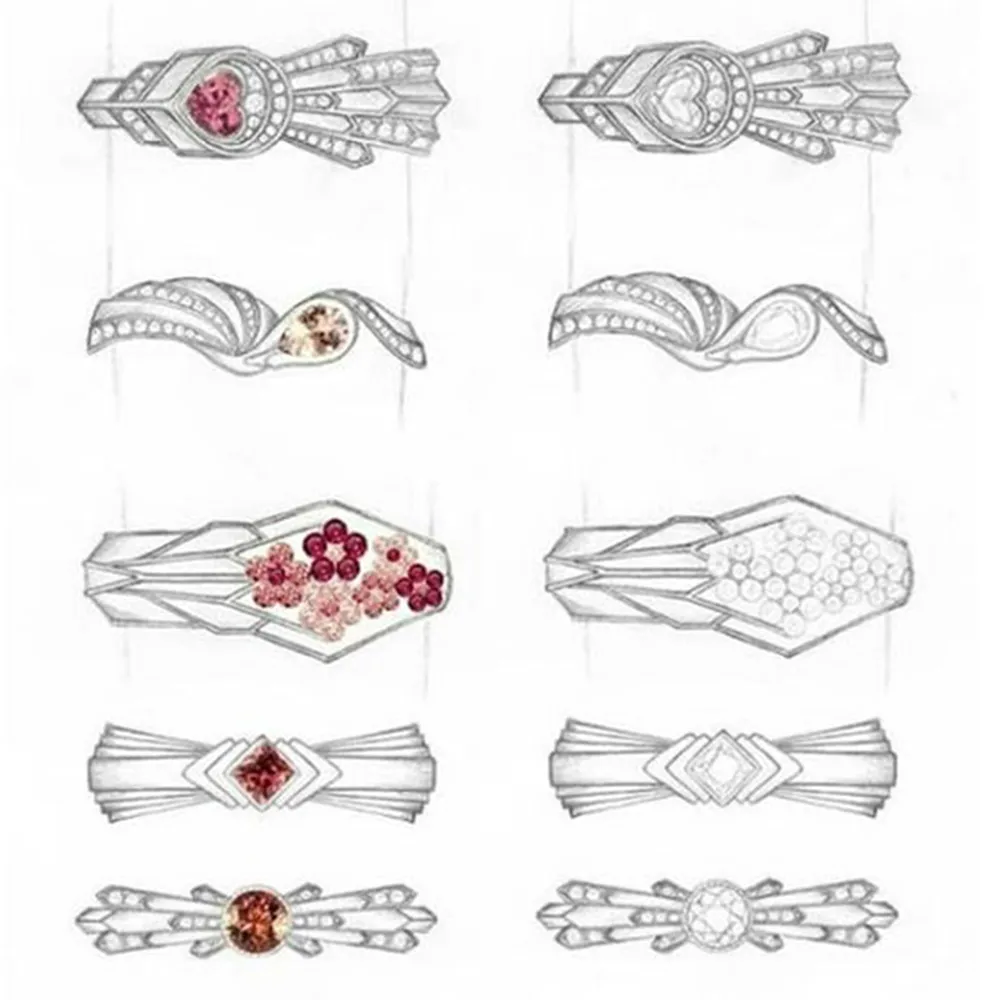
Step 1: Professional consultation and solution confirmation
Project launching starts with effective communication. Our engineers will cooperate with you to confirm the Pantone color number of the resin materials and the parameters of the metals to ensure accuracy between your design concept and market positioning from the beginning.
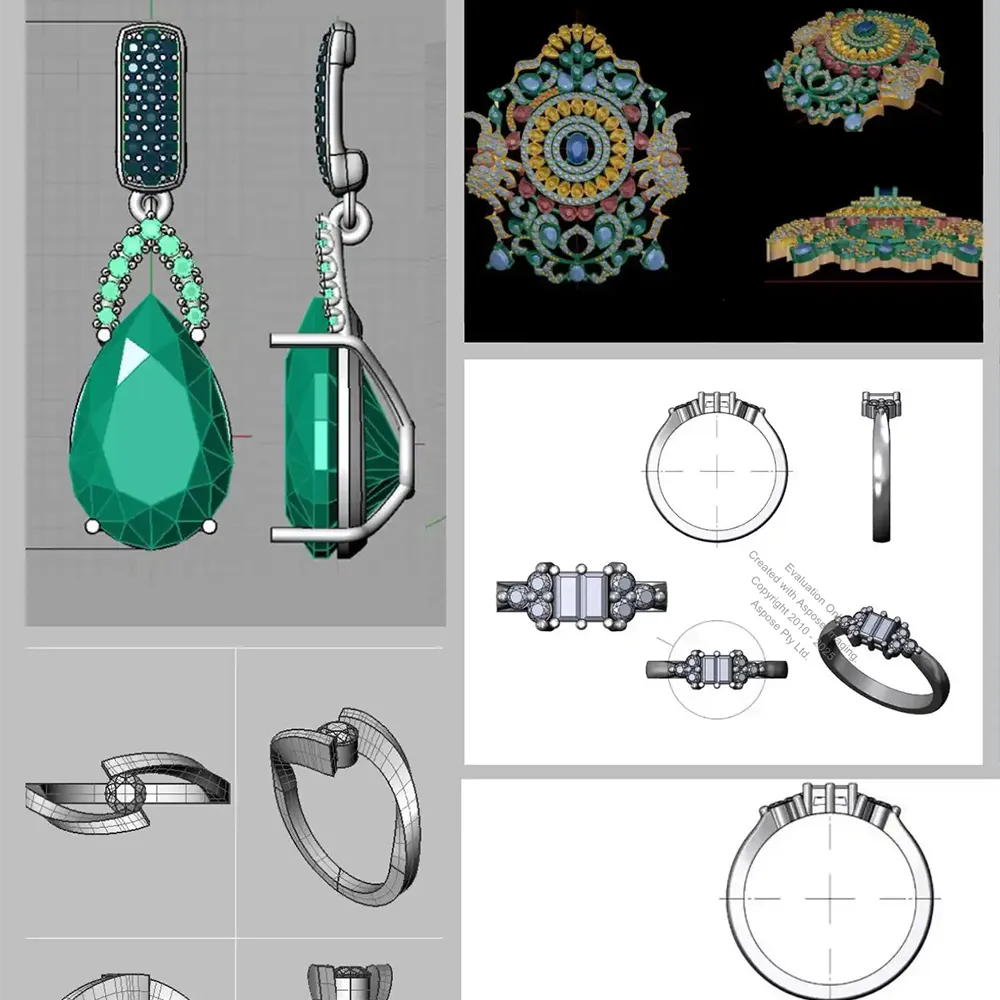
Step 2: 3D Digital Modeling & Engineering Preview
On the basis of the confirmed solution, we can provide accurate CAD drawings for verification. The trick is that the modeling system at Haosen Jewelry takes into account the properties of the materials and compensates for the cure shrinkage rate of the resin, preventing possible deviations in the structure and dimensions from the digital model and making the molds on the first try.
Step 3: Vacuum Casting and Quality Control
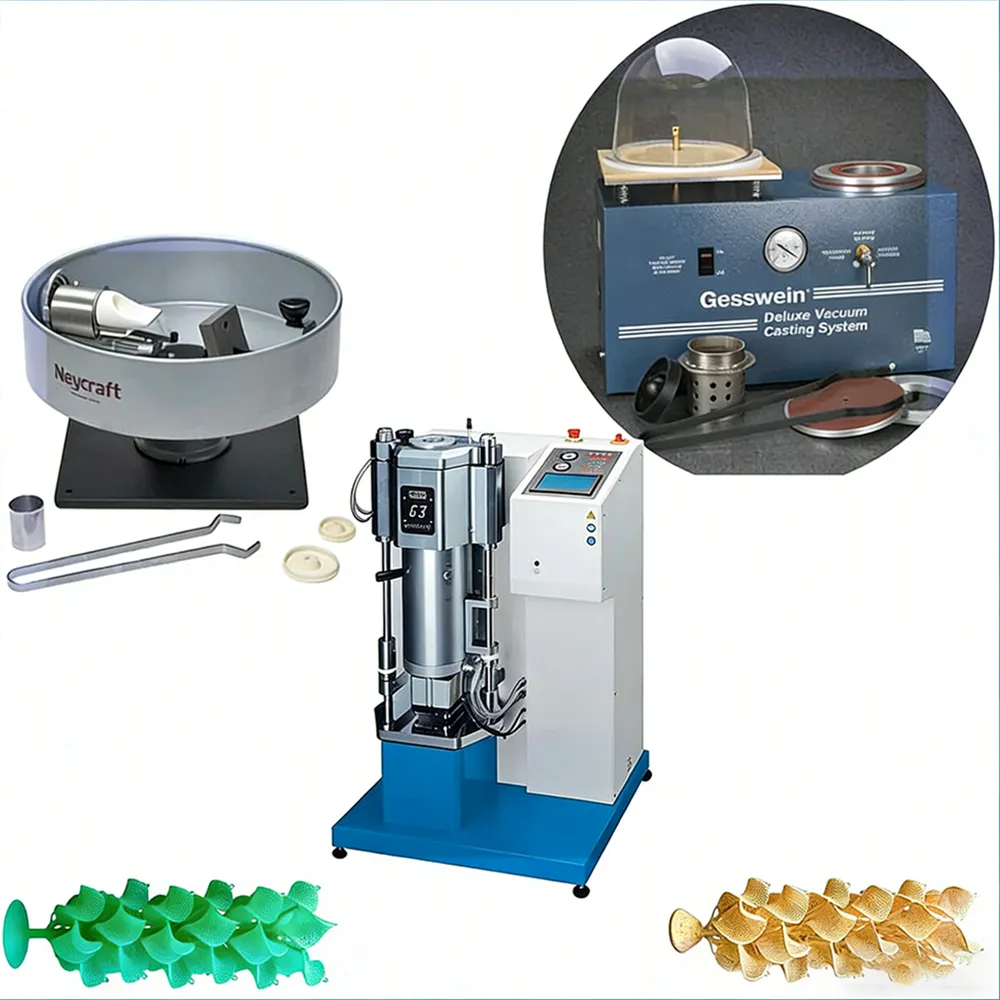
Casting is a very important step concerning quality. We make use of the vacuum degassing process that removes the environmental conditions necessary for the formation of bubbles prior to resin casting. This is the most essential process that guarantees that the end resin is clear, flawless, and of the best quality.
Step 4: Precision Assembly & Ergonomic Polishing
In addition to the perfect combination of both metal and resin materials, Haosen Jewelry is particular about details. Each and every detail where the metals are in contact is fine polished multiple times, and that meets strict standards in terms of smoothness and comfort for jewelry that is worn on the body because the final product should not only be beautiful but also provide comfort. “This end-to-end, transparent process will enable you to take an active, partnership role—to not just observe, but participate, in the joint creation of high-quality products which meet market demands.”
FAQs
Q1: What makes Haosen Jewelry different from other "resin necklace pendants manufacturing" factories?
Unlike standard factories that glue resin pieces onto metal, we use a direct-pour vacuum casting method. This ensures a molecular-level bond between the resin and the metal frame (whether Steel, Brass, or Alloy), preventing the common issue of “stone loss.”
Q2: Can you help us design the collection if we only have a mood board?
Yes. As a full-service jewelry ODM partner, our design team can translate your mood board or rough sketches into technical CAD drawings ready for production, offering suggestions on the best metal-resin combinations.
Q3: Is your stainless steel resin jewelry truly hypoallergenic?
Absolutely. We use 316L surgical-grade stainless steel for our premium lines. This material is rigorous tested to be nickel-safe, making it the ideal choice for brands targeting sensitive-skin consumers in EU and US markets.
Q4: What is the lead time for a custom resin necklace order?
For custom resin necklaces, sample production typically takes 7-10 days. Mass production ranges from 25-35 days, depending on the complexity of the metal mold and the curing time required for the specific resin formula.
Q5: Can I customize the resin opacity and finish?
Yes. You have full control over the aesthetic. We can produce high-gloss transparent finishes, matte opaque “stone” looks, or semi-translucent effects. We can also color-match to your specific Pantone branding colors.
Q6: Do you offer packaging services for OEM orders?
Yes, we provide a complete jewelry OEM service which includes custom packaging solutions. We can card, box, and label your necklaces so they arrive retail-ready, streamlining your logistics and reducing your handling costs.
Conclusion
Through modern combinations of translucent resin with stainless steel, classic blends of resin with brass, and trendy mixing with aluminum materials, your design intention is completely accomplished with perfect metal choices. This is not merely craftsmanship but also market intent. As your faithful partner, Haosen Jewelry provides these innovative ideas with implementation in changing them into high-quality marketable commodities through 7-day rapid prototyping, flexible MOQ, SGS-approved materials, and rigorous QC.
Your next legendary series of products initiates with a professional beginning. Get in touch with Haosen Jewelry today to kick off your customized OEM/ODM service. Let us help turn your ideas into a series of products that will conquer the market.

Jasper Jiang
Jasper Jiang is the founder of Haosen Metal Jewelry. Since the age of 26, he has combined his deep roots in traditional craftsmanship with a sharp vision for the market to build the foundation of our excellence.